

Holidays For Black Folks
Our Culture Must be Defined and Celebrated by Us.

Click Here to watch
https://www.nps.gov/hatu/learn/tubmantalks.htmh “Tubman Talks”.
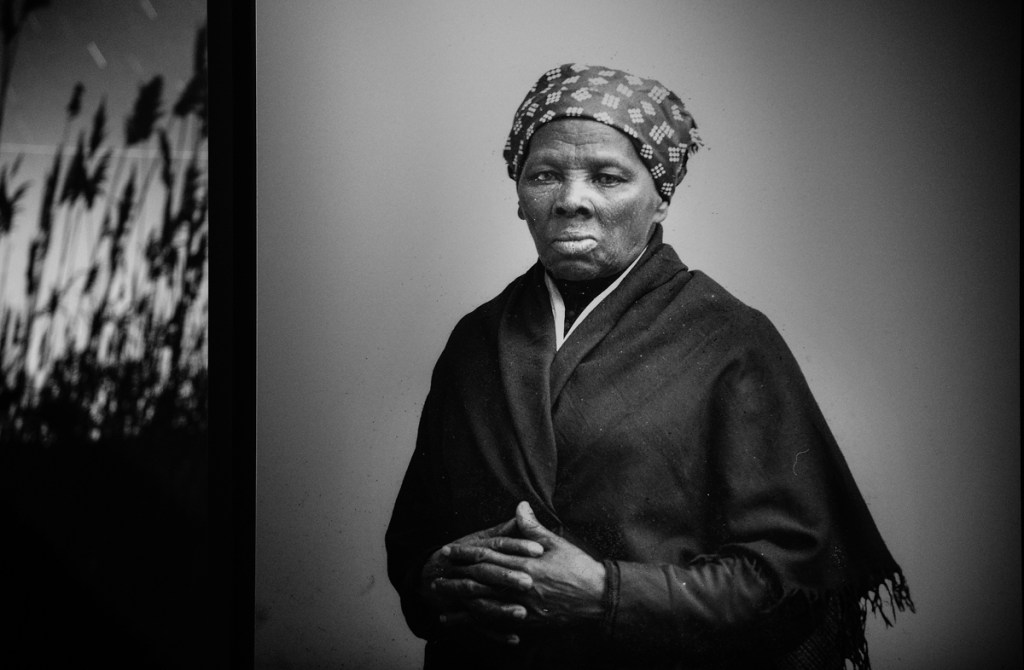
There have been many people who have moved to ensure that Harriet Tubman is honored for her heroic work as a conductor on the Underground Railroad and her many other accomplishments. Harriet Tubman Day was first organized in 1967 by Addie Clash Travers, Harriet’s great great granddaughter. The celebration was held in Bucktown, MD on Maryland’s Eastern Shore in the community churches where Ms. Tubman was born. Harriet Tubman day was signed into law by the U.S. Senate on March 6, 1990 and a proclamation was signed by President George Bush on March 9, 1990. In the year 2000 Louis C. Fields, President of the African American Tourism Council of Maryland, founded the Harriet Tubman Day of Remembrance in the state of Maryland. Governor Larry Hogan proclaimed 2022 to be “The Year of Harriet Tubman” and celebrated her legacy on the bicentennial of her birth at the Harriet Tubman Underground Railroad National State Park in Church Creek located in Dorchester County, Maryland. The park features a museum with artifacts, a gift shop and lots of information about the life journey of Harriet Tubman.


Morgan and Vanessa are on a mission to unleash a mass movement for health justice. They have launched a global organization of Black Women called GirlTrek who are walking for better health. In 2013 They organized 15,000 to gather on the National Mall under #WeAreHarriet as a moving tribute to Harriet Tubman. “Because If Harriet could walk to freedom we can walk to better health.”
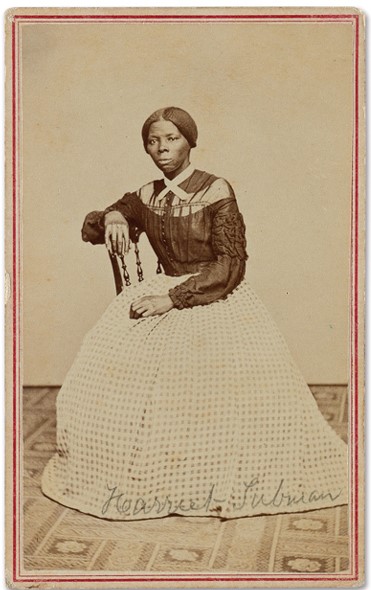
Harriet Tubman was born as Araminta Ross sometime between 1820 and 1825. She later took the first name of her mother and the last name of her first husband. Research suggests her birth may have been in 1822. She was one of nine children born to Harriet and Ben Ross who were enslaved by Eliza Anne Brodess and John Thompson in Dorchester County, Maryland. Like many slaves, Harriet was beaten by evil overseers as a child and by the time she was 27 years old she had sustained an injury to her head that caused her to experience narcoleptic episodes. She also began to have what she described as visions. On September 17, 1849, these visions guided Harriet and her brothers as they escaped slavery and headed north.
Harriet returned to the south many times to lead others to freedom. Her acts of heroism awarded her the name “Moses”Harriet traveled through a maze of hiding places and rest stops that were hosted by those who opposed slavery and offered assistance along her route to freedom known as “The Underground Railroad”. Eliza Brodess and her son Edward owned Harriet and placed an ad for her capture and return that was incentivized with a reward of $50 to $100 for her return and for each of the slaves traveling with her from their plantation. Harriet was hunted by slave catchers who threatened to return her and her passengers to the plantation.
She never ran her train off the tracks and she never lost a passenger. She traveled with a pistol in her skirt to encourage those who would turn back to keep moving forward as she deemed the suffering of slavery to be next to the suffering of hell. In other words it was better to die on the run from slavery than to live as a slave.
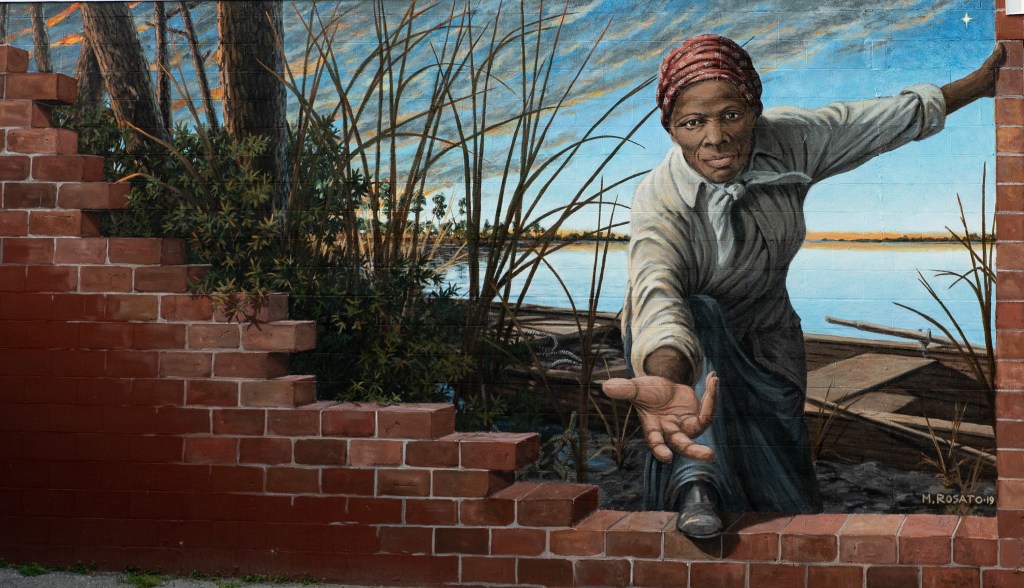
Click Here for the Driving Guide to Harriet’s Journey

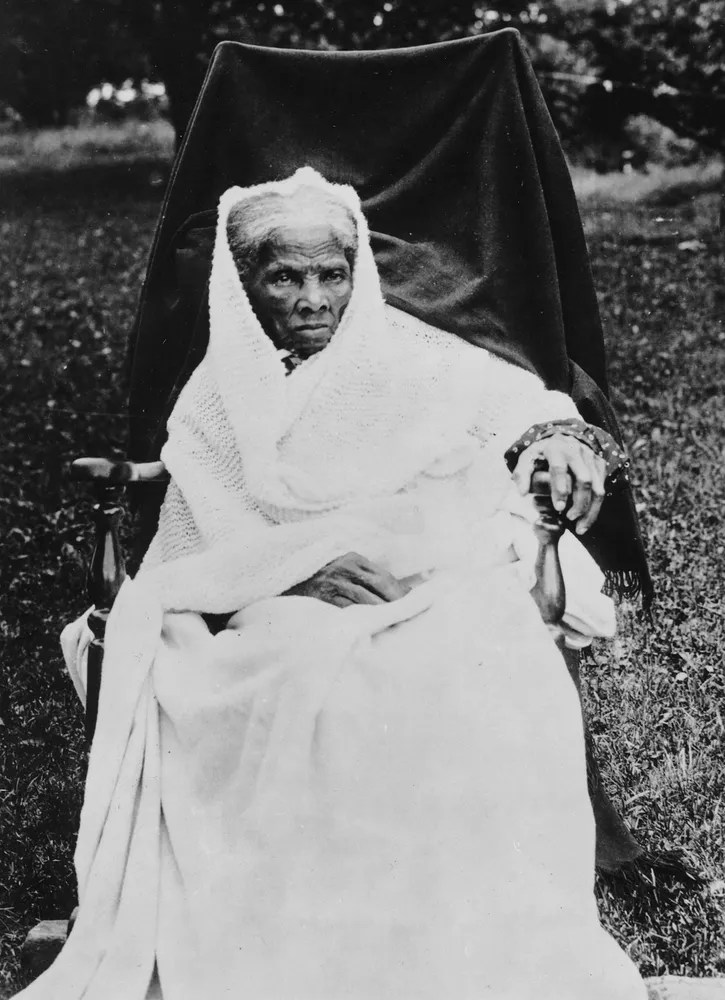
Harriet was a conductor on “The Underground Railroad”. She initially led her passengers to Philadelphia and New York but escaping became more dangerous as a result of the “Fugitive Slave Act”. She would eventually lead her people into Canada. Harriet was also an abolitionist fighting to end slavery. She made significant contributions to the abolitionist movement in collaboration with Frederick Douglas and many others who fought to end slavery in America.
By the time slavery was abolished Harriet had become a war hero by serving the Union army as an armed scout and a spy. She rescued Union soldiers that had been captured during the civil war. She was the first woman to command a military unit.
Once the war ended Harriet retired at her home in Albany, NY which is now known as the Harriet Tubman National Historical Park where she took care of her aging parents and worked as an activist in the Women’s Suffrage Movement until she became ill with pneumonia. Harriet lived to be about 91 years old; her last words were, “I go to prepare a place for you…”. Her final resting place is at Fort Hill Cemetery in Albany, New York.

The life of Harriet Tubman has inspired many to celebrate this iconic woman you may visit the Harriet Tubman Home or other National Historical Parks bearing her name, Join the GirlTrek Movement or sit down to watch one of the many movies based on her life.
Harriet Tubman was depicted in the film, “A WOMAN CALLED MOSES”, starring Cicely Tyson, directed by Paul Wendkos, written by Lonne Elder, III which was based on the book by Marcy Heidish and produced by Ike Jones and Michael Jaffe and narrated by Orson Welles.

Click Here to Watch
 Holidays For Black Folks